
Tibetan American indie filmmaker Tenzin Yeshi makes his feature debut as director, writer, and star with Midnight Momo, a one-location time-loop tragicomedy, set in a Tibetan restaurant in New York’s Jackson Heights.
The film recently had its North American premiere at VIFF 2026, where Tenzin and director of photography Tenzin Gurmey sat down with Nick Lay to discuss the Tibetan American experience, making a film for $4,000, and shooting long takes wild on the streets of Queens.
 Follow ILT on twitter @iltfilm
Follow ILT on Letterboxd
Nick Lay: Midnight Momo really mashes together an eclectic mix of genres, themes, and tones. Where did the idea come from?
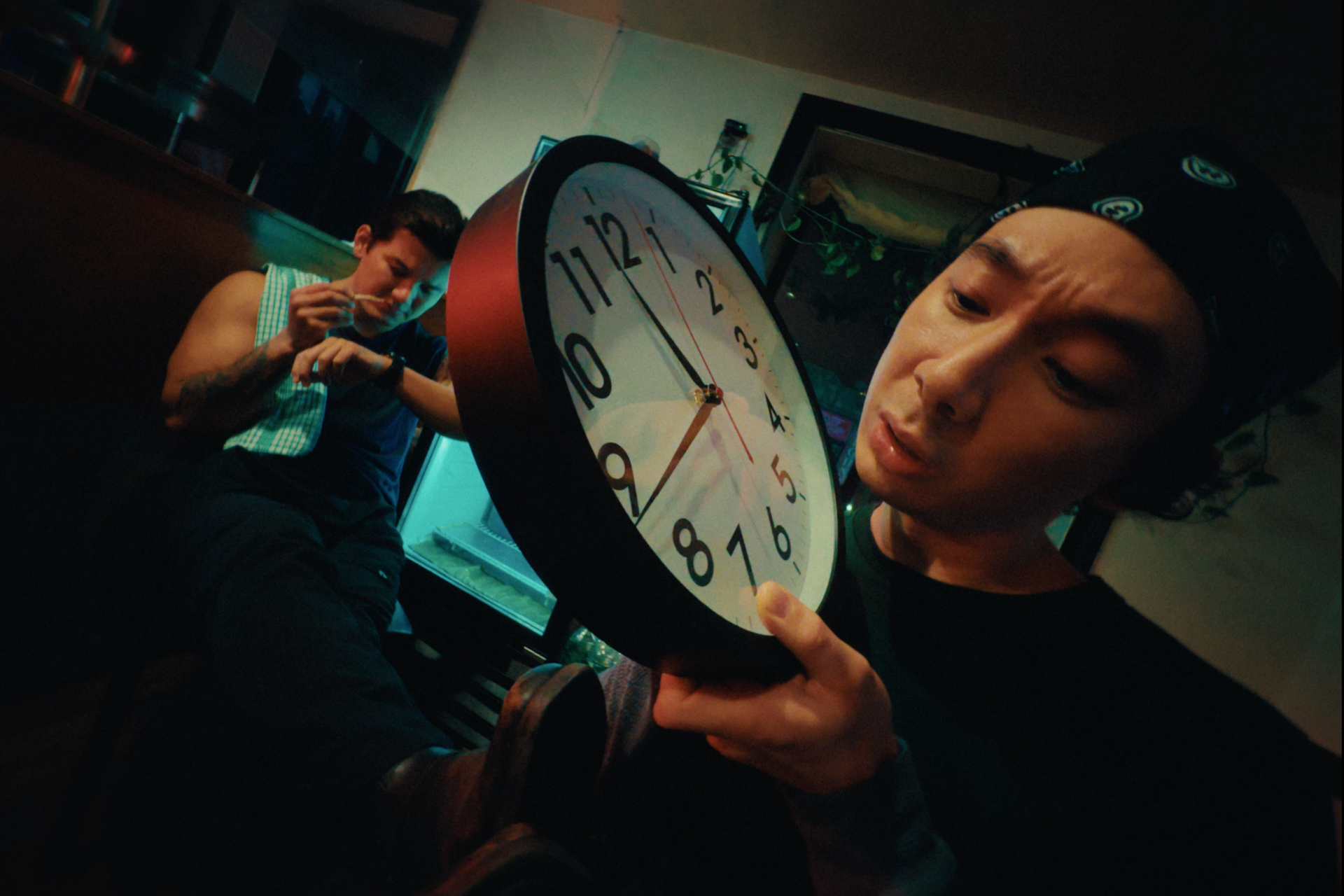
Tenzin Yeshi: I was talking with Rinzin Ngodup, the other lead actor in the film, whose father is the manager at a Tibetan restaurant in Jackson Heights. He said we could use the restaurant if I wanted to film something and a light bulb instantly switched on in my head. It made sense to make it at the restaurant as we could make it within our budget. I got a bunch of friends to agree to do the project and the screenplay evolved from the location. Because it was primarily one location, I had to make it more interesting, so I decided to go for a time loop concept. I’ve been working at restaurants all my life and I always dread the last fifteen minutes of my shift. If a new customer comes walking in, that means we’ve got to start up the kitchen again. That adds like another 45 minutes to our shift. We don’t like that. We find it annoying, but of course we’re going to be respectful to our customers. But I thought to myself, what if those last fifteen minutes of my shift keep repeating and repeating? What if we’re trapped in the fifteen-minute time loop? I knew it then, that’s our screenplay, that’s our film right there. So I wrote five time loops as five acts.
Tenzin Gurmey: In the beginning, Tenzin [Yeshi] sent me an e-mail about the project. I’d never worked with him before, but when I got the script, I immediately knew that it would be challenging. I had just graduated and was living in Belgium, but I really liked the script and saw this as a chance to go to New York to make my first feature film.
NL: Is it true that it cost only $4,000 to make and was shot on an iPhone? What was the production like?
TY: The film was always going to be self-financed, hence why it’s all shot in one location, because we wanted to stick to our budget. When we were looking at the restaurant, we were told we could only film overnight because they couldn’t shut down the restaurant, of course. So we filmed it from midnight to 6 a.m., and since we had budgetary constraints, it did not make sense to shoot it like a traditional film, as that would mean messing with lights and everything for each coverage shot. I thought if we do long takes and just follow the actors around in this space, we can really cut down on budget and time. We can hammer this thing out pretty quickly and focus on the performance of the actors. The concept became a one-take approach for all five acts. Of course, there were some cuts in between, which we tried to make invisible. Some worked pretty well, some not so well, but that was just me evolving as a filmmaker. And then Tenzin [Gurmey] came up with the idea for shooting it on an iPhone, to meet my budgetary constraints. The $4,000 budget mainly went towards paying for the restaurant and rehearsal space. For the actors, a few of them were from a casting session through Backstage and Actors Access, but a good chunk of them were actors that I knew and trusted and had trained with me at acting school, which really helped the production. When I asked them to be part of the production, I knew I could believe in them.
TG: Once Tenzin [Yeshi] told me it was going to be one take, I had to think about how we were going to light it. I had to think 360 because we were doing a lot of movements and the iPhone really helped us to keep the setup small and to move around freely without having to change setups every minute. The iPhone originally came up as a joke, and we talked about using other cinema cameras, but then we realised the iPhone could really help us in a better way. You can now shoot in RAW and the dynamic range is quite good, so the iPhone actually worked out great. We used the Blackmagic [Camera] app, where you can really dial in all the settings you want, and because it was shot in RAW, it was coloured afterwards in post-production. Everything was handheld as we knew we would have to move around, walk, run, and sometimes walk backwards while filming. The handles on the iPhone really helped and it made the picture a lot more raw and interesting.
NL: Which takes were particularly memorable during the shoot?
TY: Well, as I was directing as well as acting in the film, the toughest part for me was the very first scene, which was actually the very first thing we shot on day one. We were just getting our bearings and we were a bit nervous on that first day. You probably wouldn’t be able to tell as an audience member, but we were very shaky on that first take, and we did like four or five takes, just trying to see if everything worked. But then on the fifth take, we thought, “We can actually pull this off. This might be workable somehow”. Another long take, which was an eight-minute shot, was a scene with me and Francesca Gamba, who plays my girlfriend, Jen. That was our longest take and there was no cut in that scene. It was a very difficult take because there was a lot of blocking and camera movement. Our rehearsal time really went into this production and that helped us a lot on set, because when we rehearsed the blocking, we really dialled in the performance and made sure everything was on point. Then, when we did get on set, we felt slightly more confident. Not that we were super confident, because we were first-time filmmakers, but the rehearsals really helped us with the long shot takes.
NL: The Tibetan American experience runs through the heart of Midnight Momo. Was that the idea from the start or did it evolve with the location and the story?
TY: That definitely stemmed from the location, because it was a Tibetan restaurant in Jackson Heights, Queens. The Tibetan community there really knows that restaurant because it’s a place where we’ve all eaten growing up. It’s kind of hidden away down these sketchy stairs that you need to take to get up to the restaurant. Since it’s a Tibetan restaurant, the Tibetan American experience and the immigration experience growing up in Queens felt unavoidable, so that bled through the screenplay and into our production. It was impossible to escape it, and as a Tibetan American filmmaker, I felt like I had a responsibility to explore that concept of immigration and also what’s currently happening with ICE deportations in America, which is something that heavy immigrant communities in New York are dealing with right now. That bled into the screenplay as well, as did the wider community of Jackson Heights with all of its cultures and foods and colours. That concept really shaped the film.
NL: There’s one long sequence where you leave the restaurant and venture down into a subway station. Did you shoot it wild and what was it like filming at night in Jackson Heights?
TY: Yeah, we did shoot wild, but even in the middle of the night at 3 a.m. we had run-ins with the public during some takes, where drunk people were walking by, wondering what we were doing, but, of course, it’s a public sidewalk. We’re not going to try to get a permit or shut down the street and be like, “Hey, get out of our shot”. It’s all public. But we did have to do that shot a few times just to get no distractions, no people in the way. We did that stuff on the fly and hopefully it worked out in the film. Even when we were doing the scene in the train station, there were people walking by and we just had to roll with it. I’m the director, but I’m also acting in it, so if Tenzin [Gurmey] didn’t call cut, I wasn’t going to call cut either. We just rolled with it and it made it into our final cut.
TG: When we were shooting in the station and people were walking in, because I was shooting on an iPhone I was able to move around and get the shot, even as the people kept going past. The location, running to the station and all that stuff, I think it really added something extra.
NL: Did you get that shot in one take?
TG: We actually did the station shot over two days because of the lights. There were lot of lights that we couldn’t control and after the first day we knew some of them were way too strong. They were so strong that I couldn’t get the proper exposure. The next day, we knew what to expect and we tried to manage the lights with gel filters, which we used to block some of the lights to get the right exposure.
TY: Yeah, we semi-vandalized the place by putting up gel filters on public lights, but we took it down afterwards and everything was fine. Tenzin [Gurmey] was essentially editing the film while we were shooting it, just to make sure that the invisible cuts kind of worked well. He realised that the lighting wasn’t up to his standards as a DP and that it needed to be improved. At the same time, we realised we could also improve some of the dialogue and the performances of me and my co-actor [Rinzin Ngodup], so we went back for a second day to reshoot that scene in the train station.
NL: The jazz beat soundtrack is very New York and really drives the tone. How did you develop the music for the film?
TY: Oh yeah, that was Tomoki Iwata. She’s my wife actually! I came up with the music concept of jazz early on, while I was writing the screenplay, but I only told her about it after we were done shooting and in post-production. Then, during post-production, when we were at home and our toddler was asleep, she worked on the music. Only during nap times did we really have time to work on any post-production editing or music. I asked her to create some jazz beats for me, almost like songs, and she created like a dozen and a half for the film. Some of the songs act as the actual backing soundtrack to the scenes, but others I chopped up and used as moments to highlight certain lines. An actor would say a line and the music would give highlights and pops to the dialogue, because there’s a lot of repartee that goes on between different characters. The beats really added punches of colour to the scene.
NL: The production has a real New York dreamscape-theatre vibe to it and you aren’t afraid to flirt with breaking the fourth wall. What drove that approach?
TY: I started out as a theatre actor first, so that bled into the production as well. When it is one shot, you’re just following the actors around, so we had to make the camera work and the blocking of the actors more interesting, as we couldn’t have crazy lights and different kinds of shots in between. My training as an actor and my time in the theatre definitely influenced the production, as well as how to run the rehearsal room, how to get the best performance out of the actors, and how to block and frame up the shot so that it looks interesting and more entertaining for the audience. There is definitely a kind of wink wink aspect to the fact you are watching a film, because at the end Tenzin [Gurmey] comes out from the back and into the frame with us, which lends itself to the dreamlike quality you mentioned. For Tenzin [Gurmey], Wong Kar-wai was a big influence on the colour and the shape of the film, so I think he coloured that influence into the film as well.
NL: What are your influences as filmmakers and how did they push you forward on Midnight Momo?
TY: I grew up watching Pineapple Express with Seth Rogen, and then also Vince Vaughn and Sacha Baron Cohen. Some of them are directors, but they’re actors as well, and just seeing that is possible definitely influenced my work. There’s not a lot of Tibetan American roles out there and I realised that if I wanted to make something that I wanted to act in, then that would be a challenging role for me. I had to do it by myself and that’s why I stepped into the role of writer and director, to create more Tibetan American stories. That was an influence for me, and seeing that the filmmakers I mentioned were writing, directing, and acting in their own projects, I was like, “Okay, this is semi-possible, maybe I can give it a shot here and there and see what’s possible for me”. And now I’m here giving this interview with you, so I see that it is possible.
TG: Being Tibetan, we have a lot of stories that haven’t been told. Tibetan cinema is quite new, so growing up I did not see a lot of Tibetan films, so that has given me the drive to make more Tibetan stories.
NL: What’s next for you both? Do you have any new projects in the works?
TY: I definitely do want to tell more Tibetan American stories and Tibetan stories in general. We’re tinkering with a few things here and there, but nothing is concrete.
TG: I work in the Belgium film sector and do have some short films that I’m working on, but I’m also trying to see what I can write, because as a Belgian Tibetan there are a lot of stories that we can tell, and I’m looking for anything that I can make something interesting out of.
NL: Are there any films you’re excited for or filmmakers you’d like to shout out at VIFF ’26?
TY: There is another Tibetan filmmaker who’s part of VIFF this year, Kunsang Kyirong. She made a short film [Letters From Tibet] and last year she made a film called 100 Sunset, which premiered at VIFF and TIFF. We met her at the Zurich Tibetan Film Festival and she’s a great, great person, so I’d like to shout her out.
Midnight Momo played at VIFF 2026.
This interview was originally published on FilmHounds.co.uk

