
History never felt so alive.
 Follow ILT on twitter @iltfilm
Follow ILT on Letterboxd
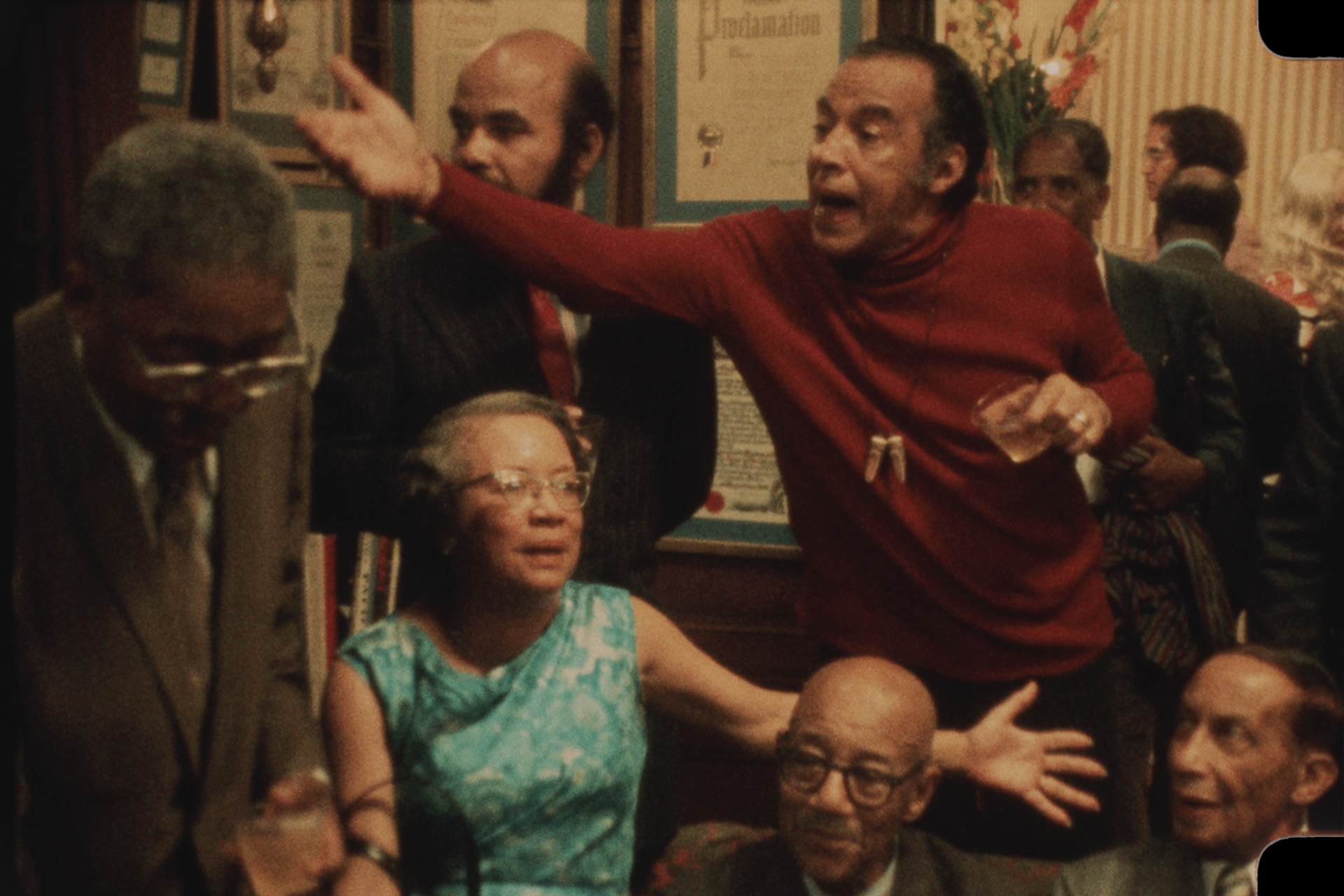
There is something fascinating about discovering lost history. Moments that were once a vibrant present become memories, those memories fade, and eventually the people who lived them are gone. In 1972, filmmaker William Greaves gathered a group of artists, writers, and musicians at Duke Ellington’s Harlem townhouse to reminisce about the cultural movement they had helped to create some half a century earlier. More than 50 years on, that footage has emerged as history within history: an extraordinary record of the Harlem Renaissance told by the people who were there to witness it.
That we can see Greaves’ footage at all is something of a miracle. The original project was never completed and the footage remained largely unseen until after his death, when his son David, who was in the room that day working one of the cameras, rediscovered the material. With Once Upon a Time in Harlem, the younger Greaves has taken his father’s images and crafted something remarkable, as he allows the people gathered in front of the camera to speak for themselves about an era now 100 years in the past. And what a group they are. Painter Aaron Douglas, artist and writer Richard Bruce Nugent, poet Arna Bontemps, musicians Eubie Blake and Noble Sissle, photographer James Van Der Zee, and Ida Mae Cullen, widow of poet Countee Cullen, are among those gathered together.
These folks may have been in the twilight of their lives by 1972, but their vibe could not be more energetic and their company nothing short of wonderfully entertaining. They laugh, reminisce, disagree, and even full-on argue as they recall the people, places, and ideas that defined one of the most important creative movements in Black American history. William Greaves is a presence in his own right, simultaneously out in front and somewhere in the background. He lets the conversation flow, but is never afraid to enter it, and the filmmaking itself quickly becomes part of the experience. Rather than act merely as a fly on the wall, Greaves dives into the middle of the web and his footage is fantastic, supplemented in his son David’s edit by archival material that takes us back to the faces and events of the Harlem Renaissance.
There is no neat consensus here, but rather the messiness of memory itself. These are people looking back on a shared period from different perspectives, sometimes challenging one another’s recollections and interpretations of events. Greaves gives them the space to do so, preserving not only their stories, but their personalities and relationships with each other. History is rarely afforded the opportunity to feel this alive, and the passage of time inevitably gives their conversations another layer. Some of those sitting in Ellington’s townhouse were only a generation removed from slavery, living through an America where racism was an everyday reality and civil rights had been denied for much of their lives. Watching them more than 50 years later offers much-needed perspective. The world they describe has thankfully progressed to an extent, but many pressing questions surrounding race, identity, art, and equality remain.
Once Upon a Time in Harlem looks back without becoming trapped in the past, reminding us that history is not simply something to be studied from a comfortable distance. It is lived experience, passed from one generation to another, which in this case applies to both the subjects and the filmmakers. David Greaves rescued his father’s extraordinary work from obscurity and, in doing so, has allowed history to speak for itself.
Once Upon a Time in Harlem screened at VIFF 2026.
This interview was originally published on FilmHounds.co.uk

